To review a powder-coated school desk or chair, start with the specified finish and the evidence for the proposed coating system. A colour sample helps approve appearance. It does not establish adhesion, film thickness or corrosion performance.
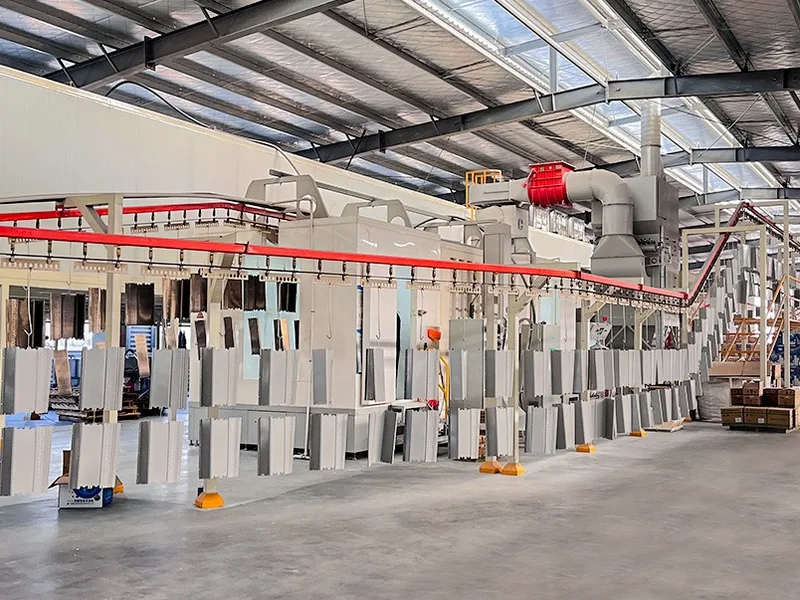
The factory photograph above shows components suspended on the coating conveyor. It is a production reference; an order still needs its own agreed specification and inspection records.
Ask for an order-specific coating description
The supplier's description should identify the substrate, surface preparation, powder product, colour and texture. It should also state the film-thickness requirement and the inspection or testing agreed for the order.
Avoid using a generic thickness number from a buying guide as an acceptance limit. The coating supplier's technical information, the part geometry and the intended service environment need to be considered together. If the furniture will be used outdoors or at a coastal site, say so before the finish is selected.
Read the evidence in three parts
Surface preparation. Request the process description for the proposed production line and the records relevant to the order. Ask how cleaning and preparation are controlled. A long list of stages, without operating records or an agreed specification, tells the buyer little about a particular batch.
Powder and cure. Keep the technical datasheet for the selected powder product, together with the applicable cure instructions. Ask how the production process verifies those instructions. AkzoNobel's Interpon energy-saving guide specifically recommends using technical datasheets to assess cure temperature and time, and checking cure on the substrate. This reference does not imply that Interpon is the powder used for a QiWeiSheng order; confirm the actual product with the quotation.
Inspection results. A useful record identifies the model or batch, measurement positions, method, results and agreed limits. A reading from one convenient flat surface does not describe every part of a frame.
Check the report against the order
| Evidence requested | Details to check |
|---|---|
| Film-thickness record | Part and batch, instrument or method, measurement locations, readings and limits |
| Adhesion evidence | Test method, coating system, sample identification, result and acceptance criterion |
| Corrosion evidence, where specified | Substrate, preparation, powder system, test conditions and assessed result |
| Finish approval | Physical reference, colour, gloss or texture and approval date |
| Inspection photographs | Overall view plus agreed joints, edges and recessed areas |
ISO 2808 describes methods for determining coating thickness. It is a measurement-method reference, not a universal minimum thickness or a certificate of product suitability. Name the agreed method and acceptance requirement in the order.
Examine the actual sample
Review the leg ends, welded joints, edges and recessed areas as well as the broad visible faces. Photograph any exposed substrate, damage or finish variation and refer it back to the agreed inspection criteria. Appearance alone cannot establish cure or long-term durability.
Ask how damaged parts will be handled during packing and installation, and whether a compatible repair method or replacement part is available. Record the agreed remedy rather than assuming a touch-up product is included.
Before approving the finish, put the coating description, approved sample and relevant reports in the same order file. The sample and inspection checklist shows where that approval fits into production and dispatch.